Word Bubble Puzzle - Word Game
- 4.8
- Rating
- 1.00M
- Installs
- Free
- Price

 Analysis by App-foxy
On a short break, I’d rather have a puzzle I can understand at a glance than a game that asks me to learn a stack of rules first. That is the appeal I see in Word Bubble Puzzle - Word Game: its word-finding play is straightforward, and a session can fit around the small pauses in an ordinary day. The trade-off is that its appeal rests on enjoying that focused activity; it is not trying to be a story-driven or highly varied game.
One practical question is whether it suits the device and routine you have. People Lovin Games made this free word game for an Everyone audience, and its Android requirement starts at version 7.0. It has been available since June 3, 2020, and its current version is 3.7. The game has a 4.9 average from around 40 thousand ratings and over 1 million installs. Those figures show that it has found a sizable audience, but I would still judge the fit by whether its particular puzzle rhythm keeps you interested.
How the puzzles feel in everyday play
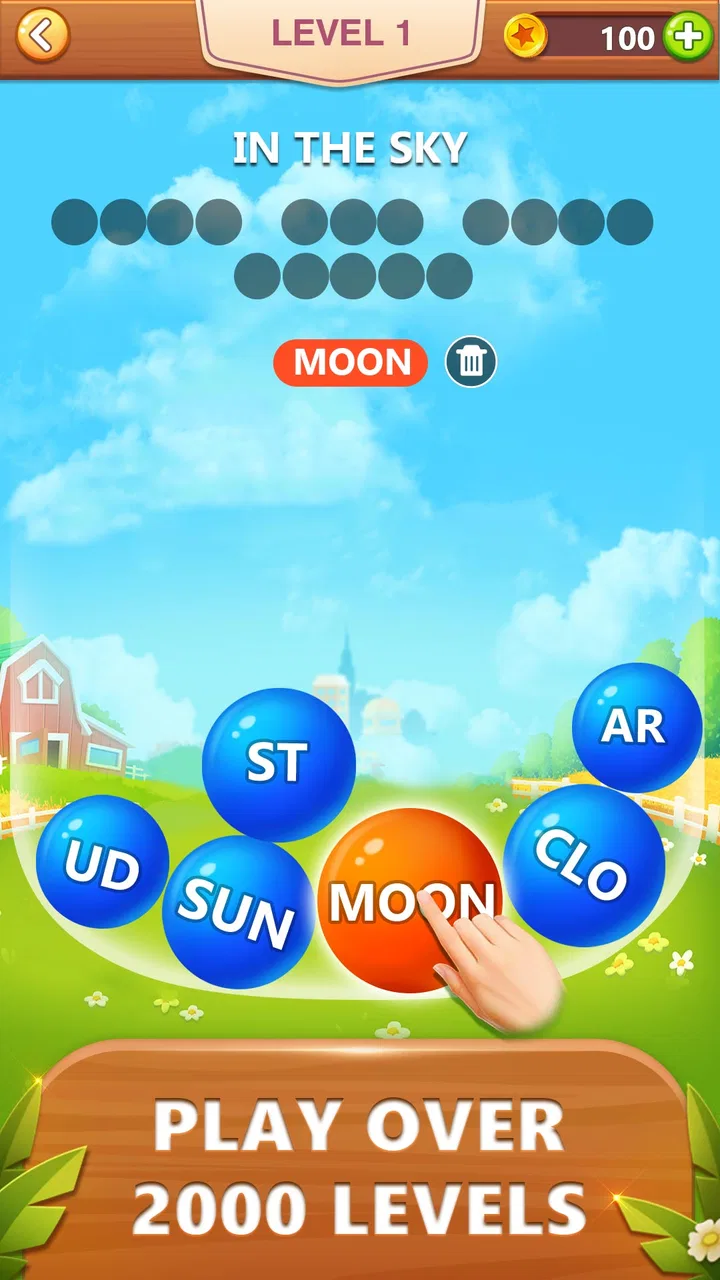
The central activity is connecting letters to reveal hidden words. I found that the game works best when I approached each board as a small observation exercise instead of rushing to find the longest possible answer. A quick scan often reveals an obvious word, while a second look at the remaining letters can expose shorter combinations that are easier to overlook.
You May Also Like

 Blood Strike: 2.5 Anniversary
Blood Strike’s Loadouts Turn Every Drop Into a Tactical Gamble
A close look at Blood Strike’s custom loadouts: how fast access to signature weapons reshapes its battle royale rhythm, rewards preparation, and narrows the gap between fights.

 Pandora - Music & Podcasts
Pandora’s Music Is Easy to Start, but Harder to Recover
Pandora’s strength is its low-effort path from a seed to a station. Its weak spot is how much confidence it asks you to place in connection, setup, and quiet recovery.

 8 Ball Pool
 Is Built on Rivalries, Rematches, and Routine
A close look at the rivalries, rematches, shared routines, and unanswered safety questions that turn a quick pool match into a persistent mobile community.

 Samsung Music
’s Quiet Strength Is Playing What You Already Own
Its reach comes less from spectacle than from dependable access to a personal library. That simplicity is both the app’s strongest retention engine and its ceiling.

 AccuWeather: Weather Radar
AccuWeather Review: A Quick, Clear Forecast for Everyday Decisions
For everyday plans, the best forecast is the one you can understand quickly. AccuWeather makes rain timing, radar, and local conditions easy to act on, with a few trade-offs.

 Hill Climb Racing
Why Hill Climb Racing Still Turns Crashes Into One More Run
A tiny car, a bumpy hill and one more upgrade: Hill Climb Racing keeps resurfacing because its simple chaos makes every near-miss feel personal.
More From Our News Desk



This structure makes it suitable for small gaps in the day. I could imagine playing a few rounds while waiting for an appointment, taking a short break from work, or winding down without committing to a long story or complicated ruleset. There is very little to learn before starting, which is one of its strongest advantages over word games built around large dictionaries, elaborate boards, or several overlapping systems.
That accessibility does not mean every puzzle feels equally satisfying. Players who enjoy discovering a hidden answer may find the format pleasantly calming, while people who prefer anagrams with strict word lists or timed competition may want more control and pressure. The game is focused on the immediate act of finding words, so its appeal comes from repetition and small moments of recognition rather than a deep narrative or strategic campaign.
A useful way to approach difficult boards
My most helpful habit was to stop staring at the letters as one large cluster. I looked first for common beginnings and endings, then tested short words before searching for a more ambitious answer. This is not just a beginner trick: short words can change the way the remaining letters appear, making a previously confusing board easier to read.
I also avoided tapping randomly when I felt stuck. Random attempts can make a simple puzzle feel more frustrating because they replace observation with guesswork. Instead, I mentally grouped letters by likely combinations and returned to the board after a short pause. That small reset is particularly useful when playing on a phone, where the compact screen can make letter arrangements feel visually crowded.
Another practical use is vocabulary maintenance. I would not describe the game as a substitute for structured language learning, but it can encourage attention to spelling, word length, and familiar letter patterns. It is most useful for someone who wants a casual mental exercise, not for a learner who needs definitions, pronunciation guidance, or lessons arranged by difficulty.
When a quick session turns into a longer one
The low learning curve makes it easy to open the game for a spare minute, but that does not mean every session will feel equally light. If I am tired or distracted, even a familiar letter puzzle can take longer to read; when I have more focus, the same kind of board can feel like a pleasant mental reset. I would treat it as a flexible pastime, not as a game that guarantees a particular pace or level of challenge every time.
A realistic use case is a wait at a clinic or a few minutes before a train. I would play one board, pause if the letters stopped making sense, and put the phone away when my turn came. That stop-and-start rhythm is a better fit here than expecting a long, uninterrupted session. It also helps keep a difficult puzzle from turning a relaxing break into an obligation to finish.
For a more deliberate session, I would set a small personal goal, such as looking carefully for short words before moving on. That adds a bit of structure without pretending the game is a formal course or a timed contest. If I wanted to track learning, compare scores, or follow lessons, I would choose a different kind of word app; this one is better suited to noticing patterns in the moment.
Where progress can become less comfortable
The free entry point is convenient, but free-to-play word games naturally raise questions about how far a player can continue without spending. Word Bubble includes in-app purchases ranging from $0.99 to $99.99 per item. That is important context for anyone who wants a completely purchase-free experience, especially families sharing a device.
I would treat those purchase options as a reason to make a personal spending decision before playing. If you only want occasional puzzles, the free download may be enough for your needs. If you are the kind of player who dislikes seeing paid options during a difficult stretch, it is worth checking the purchase flow carefully on your own device and keeping store controls in place. I would not assume that a free game automatically means every useful convenience is free.
The presence of purchases does not by itself prove that progress is unfair or that spending is required. It simply means the game has a paid layer, and the sensible approach is to decide in advance whether you want to use it. I prefer that clarity to treating optional spending as an invisible part of the experience.
Fairness for solo players
For a word puzzle like this, fairness is less about defeating another person and more about whether the player feels that solving depends on recognizing words rather than paying for relief. My experience of the core activity was personal and self-paced: I was solving the board in front of me, not competing against a live opponent whose advantage could be purchased.
That distinction matters. In a multiplayer word game, paid boosts can directly affect another player’s chance of winning. Here, the main concern is different: whether a stuck player feels pushed toward a purchase. I would judge the game most favorably when I can put it down, return later, and continue solving without feeling that money is the only practical answer to a hard puzzle.
Players who want a purely skill-based contest should know that this is not the same experience as a head-to-head word battle. There is no reason to choose it over a competitive alternative if rankings, live opponents, or measured performance are your main motivation. Its strength is the private puzzle moment, where the satisfaction comes from spotting the answer yourself.
Who is likely to enjoy this format?
I would recommend it to casual players who enjoy word searches, people who want a simple game with an Everyone age rating, and anyone looking for a low-commitment activity that can be picked up quickly. It also suits players who like solving at their own rhythm instead of learning a complicated ruleset before the first enjoyable round.
I would be more cautious about recommending it to someone who wants detailed vocabulary explanations, a formal learning path, or a rich competitive system. It is also not the best match for players who become irritated by repeated puzzle formats. The central loop is intentionally narrow, so the same quality that makes it easy to understand can make it feel limited if you need constant variety.
Compared with a traditional crossword, the experience is more immediate and less dependent on clues or general knowledge. Compared with an anagram game, it places more emphasis on spotting connections among the letters presented on the board. Compared with a competitive word app, it is better suited to private practice than social pressure. Those differences are more useful than simply calling it “fun”: the right choice depends on whether you want quick recognition, clue solving, or competition.
What I would check before spending
The purchase range deserves a deliberate look, especially because the top end is far removed from the cost of a small one-time app. I would not buy anything simply because a puzzle feels difficult. First, I would close the game and try again later, because a fresh look often helps with word boards. If I still wanted a convenience, I would verify the exact item and its cost at the moment of purchase rather than relying on a general impression.
I would also separate enjoyment from impatience. If I am buying because I genuinely value the game and want an optional extra, that is a considered decision. If I am buying only to escape a moment of frustration, I would wait. This approach is particularly sensible for younger players, even though the content rating is Everyone, because an accessible game can still include purchase choices that need adult oversight.
The game’s rating and install count make it easier to see that many people have found it appealing, but popularity should not be mistaken for a guarantee that its spending model suits every player. My own trust judgment would depend on whether the free play feels comfortable over time, not only on the first few boards.
Device fit, responsiveness, and recovery
For an Android phone running version 7.0 or later, the stated operating-system threshold is not especially restrictive. That is useful if you are keeping an older device in service, but an OS requirement alone cannot tell me exactly how smoothly a game will behave on every model. I would install it on the phone I actually plan to use and judge the response there rather than assuming that all eligible devices feel identical.
The simple letter-focused activity gives me no reason to expect the sort of demanding presentation associated with graphically intensive games, but I would not turn that impression into a promise about battery use, storage, or speed. If the game pauses or closes unexpectedly, I would first reopen it and see whether the current puzzle remains available before trying anything more disruptive. I would avoid clearing app data as an early troubleshooting step, since that can affect saved progress in many apps.
One useful habit is to finish a puzzle before switching tasks when convenient, rather than relying on an app to preserve every moment of an interrupted session. I would also keep the game updated through the usual device store if I encountered a repeatable issue. These are sensible precautions, not evidence of a known stability problem; the practical verdict should come from how it behaves on your own handset.
The questions I would ask before installing
“Will it work on my older phone?” If the device uses Android 7.0 or later, it meets the stated minimum operating-system requirement. That makes it more accessible than games that demand a recent phone, although performance can still vary between devices for reasons unrelated to the operating-system version.
“Is it genuinely free to start?” Yes, the game is free to download and play at the entry level, while in-app purchases are available. I would describe it as free to begin, not as a promise that every optional item or convenience is included without charge.
“Is it suitable for children?” Its content rating is Everyone, so the subject matter is broadly suitable for that audience. I would still keep purchase protections active on a shared device. Age suitability and spending safety are separate questions.
“Does it teach vocabulary?” It can encourage attention to spelling and word patterns, but I would not install it expecting lessons, definitions, or a structured course. Its purpose is puzzle solving first.
“Should I choose it over another word game?” Choose it when you want quick, uncomplicated letter puzzles and a solo rhythm. Choose a crossword when clues and broader knowledge matter more, an anagram-focused game when rearranging letters is the main attraction, or a competitive app when playing against other people is essential.
My trust verdict after weighing the trade-offs
My overall impression is positive but specific. Word Bubble Puzzle - Word Game is a straightforward word game with an easy starting point, a broad age rating, and enough immediate interaction to make short sessions worthwhile. People Lovin Games has kept the central idea clear rather than burying it beneath a complicated interface of rules and systems.
The important caution is spending. The game costs nothing to begin, but its available purchases range from a small amount to a much larger one, so I would approach the paid layer with boundaries rather than impulse. I also would not recommend it to someone seeking a deep educational tool or a serious competitive arena.
My recommendation is to try it as a relaxed solo word puzzle, while treating purchases as optional decisions rather than solutions to frustration. If you enjoy finding hidden words and appreciate a game that can fit into a few spare minutes, it is an easy one to understand and worth testing. If you need explanations, social competition, or a constantly changing format, another word game will probably serve you better.
FAQs for Word Bubble Puzzle - Word Game
01What is Word Bubble Puzzle - Word Game about?
Word Bubble Puzzle - Word Game is an engaging word puzzle game that challenges players to connect letters and form words. With varying levels of difficulty, it offers a stimulating experience for all ages. The game combines fun with educational benefits, enhancing vocabulary and cognitive skills as players advance through levels.
02Is Word Bubble Puzzle suitable for children?
Yes, Word Bubble Puzzle is suitable for children. The game is designed to be family-friendly and can help improve a child's vocabulary and spelling skills. It features simple controls and colorful graphics that are appealing to younger audiences, making it an excellent educational tool disguised as entertainment.
03Does Word Bubble Puzzle require an internet connection?
Word Bubble Puzzle can be played offline, allowing users to enjoy the game without an internet connection. This makes it perfect for on-the-go entertainment, whether you're traveling, commuting, or simply in an area with limited connectivity. However, certain features may require internet access for updates or online leaderboards.
04Are there in-app purchases in Word Bubble Puzzle?
Yes, Word Bubble Puzzle offers in-app purchases. While the game is free to download, players can purchase additional features, such as hints or extra levels, to enhance their gaming experience. These purchases are optional, and the core gameplay can be enjoyed without spending money.
05Can I sync my progress across different devices?
Word Bubble Puzzle supports progress synchronization across multiple devices. By logging into your account, you can save and access your game progress on any compatible device. This feature ensures you can pick up where you left off, whether you're playing on a tablet, phone, or another device.
Pros
- Engaging word puzzles for all ages.
- Simple and intuitive user interface.
- Offline mode available for play anywhere.
- Regular updates with new levels.
- Enhances vocabulary and spelling skills.
Cons
- Contains in-app purchases and ads.
- Levels can become repetitive over time.
- Limited hints without purchase.
- No multiplayer or social features.
- Requires storage space for updates.

Word Bubble Puzzle - Word Game
Gallery